

When we think about oral health, we typically focus on our teeth health, keeping them cavity free and clean. But how often do we think about our gums, and the structures helping to support our teeth? It seems like we take our gums for granted, so lets dive into what some gum diseases are, why they occur, and how we can both prevent and treat them!
What Is It?
Periodontal disease is the term used for diseases relating to the gums and other supportive structures of the teeth, including the gingiva, periodontal ligaments, alveolar bone, and cementum. These structures are grouped together to form the ‘periodontium’.
The diagram below shows the structures effected by periodontal diseases (periodontium).
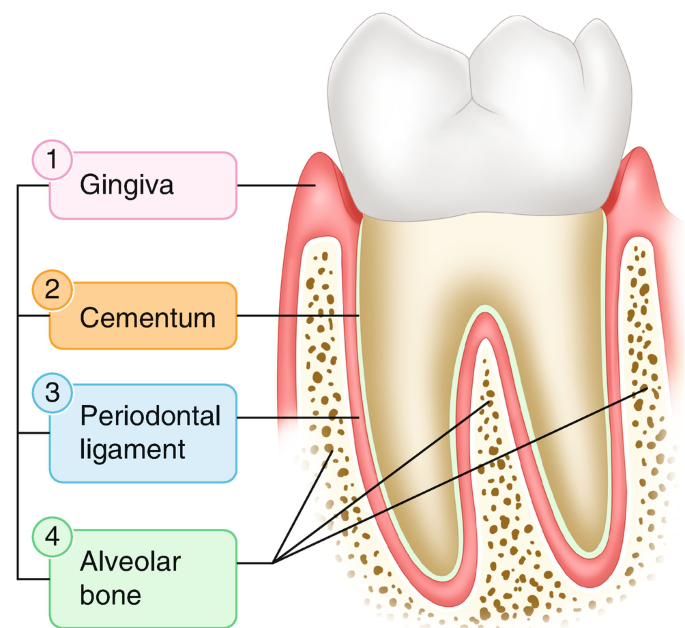
Periodontal diseases result in the inflammation and infections of the periodontium structures, ranging greatly in severity. Over time it can lead to teeth loosening, and in more severe cases, leads to tooth loss and pain.
There are two main types of periodontal diseases:
- Gingivitis: The milder form of periodontal diseases, leads to gum inflammation, causing redness, swelling, at times bleeding and pain.
- Periodontitis: Severe form of periodontal diseases, resulting in the infection spreading to the bone and tissue structures holding the teeth in place, often causing tooth loss.
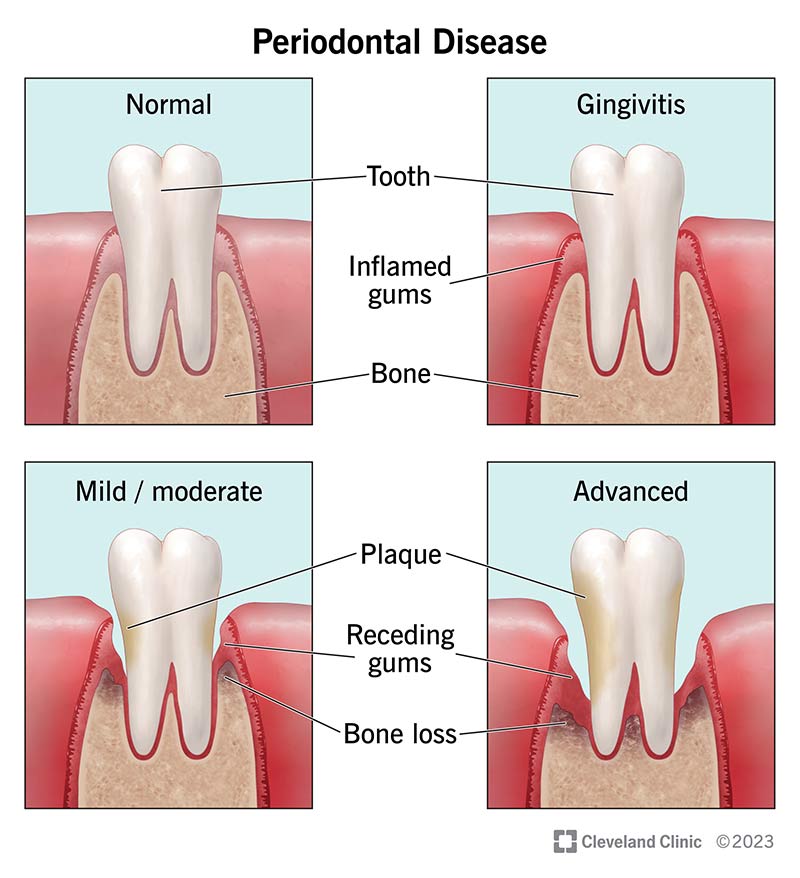
Periodontal diseases can be further labeled into four stages:
- Gingivitis: The earliest stage, no bone/structure loss, however reddish and puffy gums that may bleed and cause discomfort, especially when brushing.
- Mild Periodontitis: Infection has spread beneath the gums to the bone and structures underneath, creating ‘pockets’ of bacteria.
- Moderate Periodontitis: Bacteria begins to erode the bone and structures, resulting in bad breath, infected pus, and possible pain.
- Advanced Periodontitis: Bone and structure loss continues, causing teeth to loosen and ultimately falling out, as well as increased potential pain.
The diagram below shows the stages what happens to the periodontium.
The Canadian Dental Association (CDA) estimates that 7 out of 10 Canadians will develop some sort of periodontal disease at some point in their lives. And the World Health Organization (WHO) estimates that severe periodontal diseases effect over 1 billion people worldwide!
In essence, periodontal disease is the inflammation and infection of the gums and structural tissues of the teeth. This diseases comes in a variety of severity, progressing in stages, and effects a large percentage of the population. It causes reddish and bleeding gums, possibly progressing into pain, loose teeth, bad breath, gum recession and ultimately tooth loss.
Periodontal diseases are very common around the world. While many cases are on the milder side, it is important to understand the reasoning and causes of this disease.
Why Does It Happen?
The main enemy in this case: ‘Dental Plaque’.
Periodontal disease is caused primarily by the buildup of dental plaque, which contains an array of different bacteria that can infect your gums when oral hygiene lacks.
Plaque begins as a sticky, often unseen, film at first. Overtime, if not cleaned, it can harden into tartar, also known as calculus. In a nutshell, it ‘eats’ the sugars in your mouth, growing, and ultimately infecting the surrounding area.
Generally, the buildup of dental plaque, leading to periodontal diseases, is due to improper oral hygiene and cleaning practices.
However, there are various other factors that can increase the risk of periodontal diseases. Below is a list of a few, and how they influence the risk factor:
- Genes: In some individuals, genes can effect the immune system’s response to bacteria, increasing the chance of periodontal diseases.
- Smoking / Tobacco: Using these substances increases the buildup of plaque, and weakens the body’s immune system. This makes it harder for the gums to fight of infection, as weal as to heal. The Centers for Disease Control (CDC) states that smoking results in being twice as likely for periodontal diseases.
- Recreational Drugs Use: Many recreational drugs (and otherwise), have been shown to dry out the mouth, reducing saliva production and excretion, integral for ‘washing’ the mouth. The American Dental Association also presents that marijuana use and periodontal diseases have a direct link. Drug use may also has a negative effects of soft tissue, making them more susceptible to infection.
- Alcohol Consumption: Alcohol has been shown to damage the salivary glands, which decreases the amount of saliva excreted, thus reducing the ‘washing’ ability of saliva in the mouth. Alcohol can also lead to a deficiency in particular immune system functions, limiting the body’s ability to fight infection.
- Diabetes: Diabetes results in less saliva being produced, an aspect integral for ‘washing’ the mouth, acting as a sort of cleaning liquid against plaque. Diabetes can also increase the amount of sugar in saliva, leading to bacteria growth and plaque build-up. The American Diabetes Association (ADA) relays that diabetes can increase the risk of gum disease, which can in turn raise blood sugar levels, contributing to higher risk and severity of diabetes.
- Hormonal Changes: Such as those related to pregnancy and menopause. Fluctuations of hormone levels have been shown to increase inflammatory responses, linked to periodontal diseases and increasing risk.
- Some Medication: Some medication may have side effects that can increase the risk of plaque buildup, and increasing inflammatory response.
- Stress: Stress-induced actions, such as clenching and grinding can increase gum inflammation. Stress has also been shown to decrease the ability of the body to fight off infection, such as periodontal.
- Nutrition: Ingesting more sugary foods will help to ‘feed’ the bacteria, aiding in it’s growth and infection. Poor nutrition can also worsen the condition of your gums, and limit the body’s ability of recovery
Along with the risk examples provided above, other factors exist, including age, cancer treatments, cardiovascular health and others.
In essence, periodontal diseases are caused by dental plaque, which when left unchecked due to improper oral hygiene practices, progress into inflammation and infection. Although a lack of oral hygiene is the primary reason for dental plaque buildup, various other factors can increase the risk of this disease.
Don’t worry! It may seem daunting, with so many risk factors that promote periodontal diseases, but there are ways that we can prevent and treat this diseases. Let’s go over how we can achieve this, and get the best smile we deserve!
How To Prevent & Treat It?
In the previous sections we went over what periodontal diseases are, and why they happen. While it all seems overwhelming, it truly can be prevented and treated with just a handful of tips and tricks.
Oral Hygiene Practices
The best, easiest, and cheapest way of preventing periodontal disease is practicing proper oral hygiene. This includes brushing and flossing your mouth consistently, and multiple times a day. Oral hygiene practices are the best way of limiting dental plaque buildup. It keeps your teeth and gums clean of bacteria and debris. It aids with not only limiting periodontal issues, but improves your overall oral health! Consult a dental professional to come up with the best oral hygiene practice for yourself!
Maintain Proper Nutrition & Ingesting habits
As we went over with the risk factors, nutrition plays a big role in oral health, including periodontal. Try to limit the amount of sugar your consume, reducing the bacteria’s ability to grow, and maintain good nutrition to support your body’s immune system.
Be mindful of your drug and alcohol use. Understanding whatever complications can arise from their uses and cleaning your mouth thoroughly.
Regular Dental Visits
Make sure you visit your dentist regularly for cleanings and checkups. Dental cleanings will give your mouth the ‘deep clean’ in needs to prevent plaque and tartar buildup.
Dental professional are also trained to identify risk factors for all sorts of oral health issues, including periodontal diseases. They can catch these diseases in their early stages, and go over prevention as well as treatment plans with you!
They are also excellent sources of information, having the theoretical and practical know how. If you have any questions or concerns, make sure you reach out to your dental professional and they will be glad to help!
In Summary
Periodontal diseases are characterized by dental plaque buildup, causing bacteria to potentially inflame and infect the supportive structure and tissues of your teeth. It progresses in stages, from mild discomfort to tooth loss.
While this disease is highly prevalent in many populations, and seems to have many risk factors that make it even more prevalent, do not lose hope!
With a few tips and tricks, primarily relating to proper oral hygiene, nutrition and dental checkups, you can prevent this disease in yourself as well as loved ones!
Follow these tips, and give yourself the best winning smile you truly deserve!
References:
Armstrong, L. (2024, November 24). Impact of drug use on Oral Health: Drugs that cause dental problems. American Addiction Centers. https://americanaddictioncenters.org/health-complications-addiction/dental-health
Diabetes and gum disease. American Diabetes Association. (n.d.). https://diabetes.org/about-diabetes/complications/oral-gum-disease#:~:text=When%20you%20have%20diabetes%2C%20your,care%20go%20hand%20in%20hand.
Gasner NS, Schure RS. Periodontal Disease. [Updated 2023 Apr 10]. In: StatPearls [Internet]. Treasure Island (FL): StatPearls Publishing; 2025 Jan-. https://www.ncbi.nlm.nih.gov/books/NBK554590/
Gum disease and heart disease: The common thread. Harvard Health Publishing. (2021a, February 15). https://www.health.harvard.edu/heart-health/gum-disease-and-heart-disease-the-common-thread#:~:text=Known%20as%20atherosclerosis%2C%20this%20fatty,or%20other%20serious%20cardiovascular%20event.
Gum Disease Faqs. Canadian Dental Association. (n.d.). https://www.cda-adc.ca/en/oral_health/faqs/gum_diseases_faqs.asp#:~:text=How%20common%20is%20gum%20disease,some%20time%20in%20their%20lives.
Gum Disease Risk Factors. American Academy of Periodontology. (2020, February 7). https://www.perio.org/for-patients/gum-disease-information/gum-disease-risk-factors/
InformedHealth.org [Internet]. Cologne, Germany: Institute for Quality and Efficiency in Health Care (IQWiG); 2006-. Overview: Gingivitis and periodontitis. [Updated 2023 Aug 23]. https://www.ncbi.nlm.nih.gov/books/NBK279593/
Oral Health. World Health Organization. (2025, March 17). https://www.who.int/news-room/fact-sheets/detail/oral-health#:~:text=Periodontal%20(gum)%20disease&text=In%20its%20more%20severe%20form,than%201%20billion%20cases%20worldwide.
Periodontal (gum) disease: How serious is it?. Cleveland Clinic. (2023, April 10). https://my.clevelandclinic.org/health/diseases/21482-gum-periodontal-disease
Shmerling, R. H. (2024, October 8). Gum disease and the connection to heart disease. Harvard Health. https://www.health.harvard.edu/diseases-and-conditions/gum-disease-and-the-connection-to-heart-disease
Smoking, gum disease, and tooth loss. Centers for Disease Control and Prevention. (2025, February 24). https://www.cdc.gov/tobacco/campaign/tips/diseases/periodontal-gum-disease.html#:~:text=How%20Is%20Smoking%20Related%20to,for%20your%20gums%20to%20heal.







Leave a Reply